


 CULTURE FOUNDATIONS
For our staff to thrive, we need foundations in place that bring clarity to people’s roles and articulate expectations.
Here are five foundations of staff culture that create building blocks to help with that:
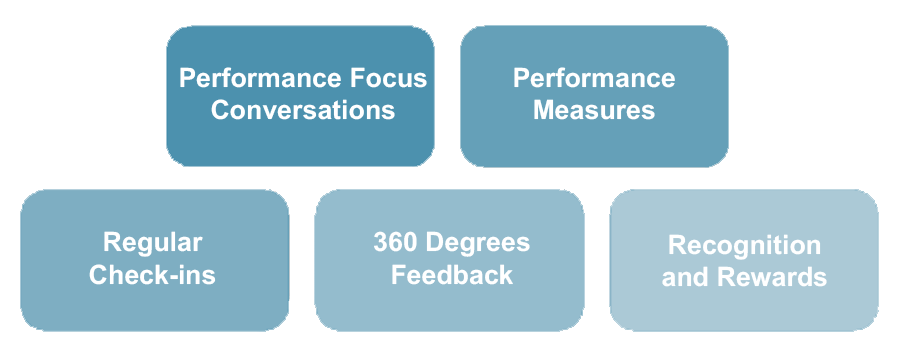
Position Focus Conversations. Managing staff performance starts with being clear about expectations. PF conversations are vital for mutual understanding of responsibilities, goals, and workload. If you don’t already have Staff Development Cycles in place in your country, you can find all the details ici..
Performance Measures. ‘Key Performance Indicators’ are notoriously difficult to set for many field staff in mission, so articulating what good, adequate, and poor performance looks like may be challenging, but it’s worth addressing. Too often, conversations about poor performance shock staff members who had no idea what their leader expected. Individual or team discussions about your team members’ plans, and how they meet your expectations, are sometimes more appropriate than written individual KPIs.
Regular Check-ins. Beyond the three annual Position Focus conversations, regular two-way touchpoints, both individually and as a team, help staff see how their role fits into the big picture of the team, ministry, and the whole movement. For many personality types, this is vital for motivation, and as a leader, it helps you recognise early signs of potential performance issues.
360-Degree Feedback. Data from the Global 360 feedback assessments are always owned by the individual, and encouraging your staff to gather 360-degree feedback can both facilitate self-reflection on performance and encourage a culture where feedback is normalised.
Recognition and Rewards. For many workplaces, performance is directly linked to financial reward. Even if we thought that this might be an effective approach, it doesn’t suit most of our needs-based salary structures for supported staff. Therefore, we want to embed non-financial recognition and reward as an important part of our culture. Acknowledging and celebrating individual and team contributions and thinking through what other small or zero-cost benefits might be possible is an essential part of a culture that values and recognises effort and sacrifice for the Great Commission. These things often resonate more than financial incentives in the mission sector.
Which of these foundations are you using to build your culture? Which would you like to improve or add?
*Taken from the document “A Guide to Managing Staff Performance” by Paul Cheseman



 French
 English
 Chinese (China)
 Chinese (Taiwan)
 German
 Japanese
 Korean
 Polish
 Portuguese
 Russian
 Spanish
 Ukrainian
 Arabic