

“What does the Lord require of you?
To act justly and to love mercy and to walk humbly with our God.” Micah 6v8
When it comes to managing staff performance and behaviour, and responding appropriately to issues with staff members, Micah addresses the tension beautifully. He tells us that the Lord requires us to act justly – our behaviours and actions should be consistent and predictable, in line with already expressed policies and procedures, and actioned without prejudice or bias.
But in acting out these things, our hearts must always pull toward love, mercy and compassion: listening well and understanding, going the extra mile for the sake of a staff member who is struggling, being creative in the application of procedures.
In the moment, this often feels like an impossible tension and can only be navigated as we walk humbly with the God who knows what it is to be human. Praying before, during and after every stage is as much a part of your role as anything else – searching your heart for anything that would unhelpfully contribute to the situation and asking the Holy Spirit to guide you as you navigate the process.
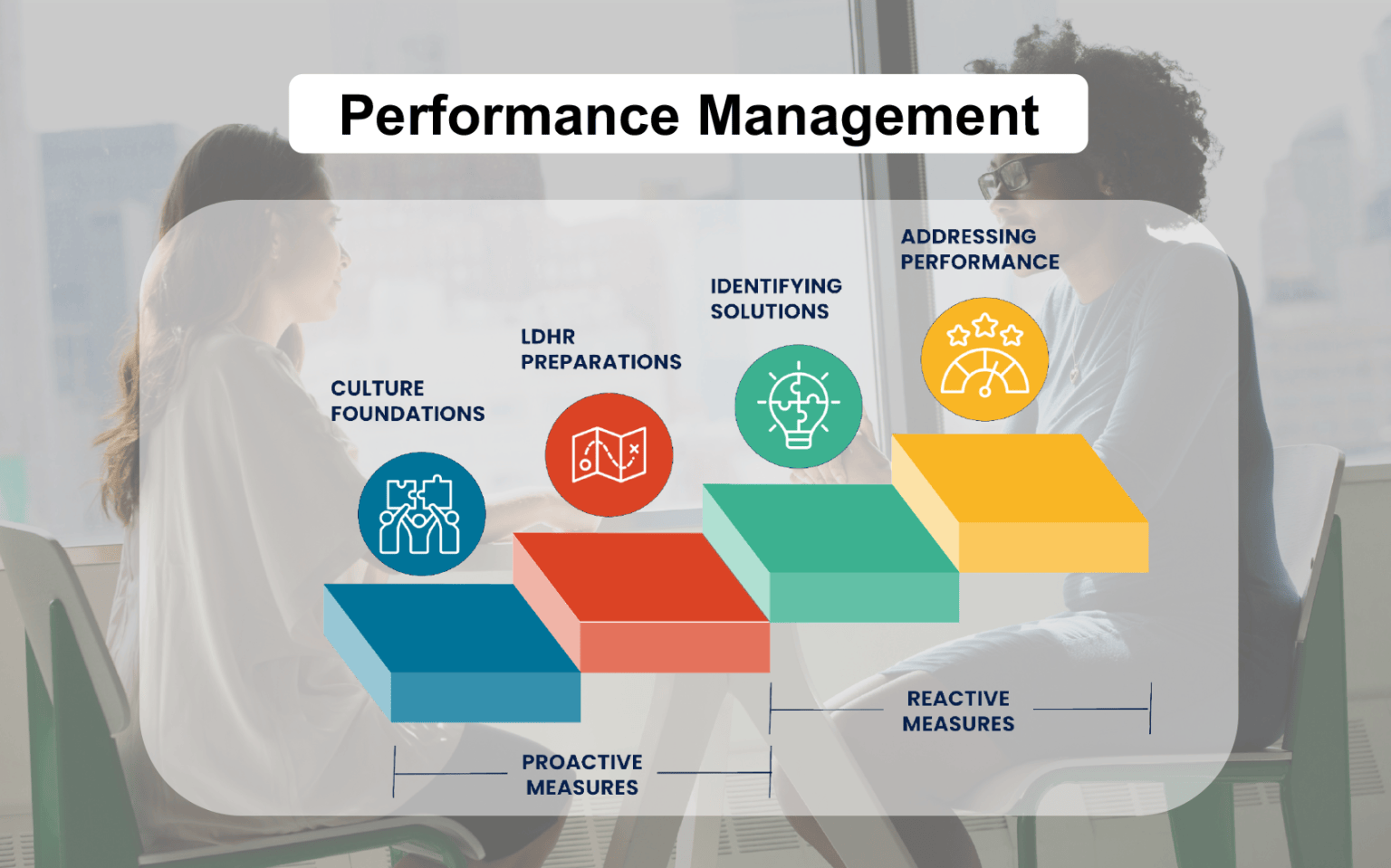
When we think about managing performance in our organisations, it’s important to consider not only the reactive measures and processes we need, but to start with the culture we create and the LDHR systems that are already in place to support, guide and enhance staff performance when all is going well.
In this guide, we will start with elements of the culture we shape and the LDHR interventions that are part of regular staff life, before looking at what might be behind underperformance and addressing it in a developmental context, and finally addressing unresolved poor performance in a disciplinary context. The ‘Culture Foundations’ and ‘LDHR Preparations’ are proactive measures – things to address before a performance issue arises. The ‘Identifying Solutions’ and ‘Addressing Poor Performance’ are reactive measures – what we need to be doing when there is a staff performance issue to address.
Taken from the document “A Guide to Managing Staff Performance” by Paul Cheesman




 Polish
 English
 Chinese (China)
 Chinese (Taiwan)
 French
 German
 Japanese
 Korean
 Portuguese
 Russian
 Spanish
 Ukrainian
 Arabic